Written by John Page DO, CST-D
John Page ran UIUK from 1994-2010. He sadly died in 2024 but the skills he taught many of us live on!
What is SER: Featuring The Story of Little Johnny
Understanding Retained Emotions and the Primitive Brain
Why does your body remember what your mind has forgotten?
Many of the traumas we receive during the adventure we call life are either entirely emotional or have a significant emotional ingredient or reaction associated with them.
The basis of SomatoEmotional Release® (SER) is that people sometimes retain an emotional experience physically, leading to loss of flexibility in an organ and/or local connective tissue with resultant impairment of function and possible pathology. Working hands-on – sometimes assisted by dialogue, sometimes not – it is often possible to facilitate the release of the affected tissue concurrently with resolution of the associated emotional issue.
We understand that our bodies have a remarkable facility, inherited from our more primitive forebears, which enables us to hold at a deep neurological level “reactively” programmed records of certain events. These events seem to be those which our primitive brain, or R-complex, has experienced as significant to our survival or some other important aspect of our well-being. “Reactively programmed”, means that every time we have an experience that connects with that earlier memory, our original reaction to it is triggered, however inappropriate that reaction may be to current circumstances. Such reactions can, of course, involve either pleasure or pain.
What can create the need for SER?
How childhood experiences shape our adult physical and emotional responses
Let’s take a couple of hypothetical examples. Imagine Little Johnny being persecuted by his teacher, who has a habit of grabbing him roughly by his left upper arm. Many years later a good and trusted friend lightly takes hold of the same part of the mature John’s anatomy, producing an inexplicable and (initially) uncontrolled negative emotional reaction.
Little Alice loves her grandmother, confides in her and feels safe in her presence. Grandmother wears a not particularly pleasant scent, which nonetheless induces a positive emotional state in Alice whenever she subsequently smells it, even through adult life.
The Story of Little Johnny: How SER Works in Practice
Can releasing a childhood memory also release chronic physical pain?
Now let’s use little Johnny (and his cruel teacher) to illustrate how he might benefit from SER. Johnny grows up with an unexplained pattern of mild headaches and upper spine dysfunctions. His left shoulder is subject to recurrent pain and weakness, which seems to tie in with stress at work. He also has an overbearing boss who bullies him.
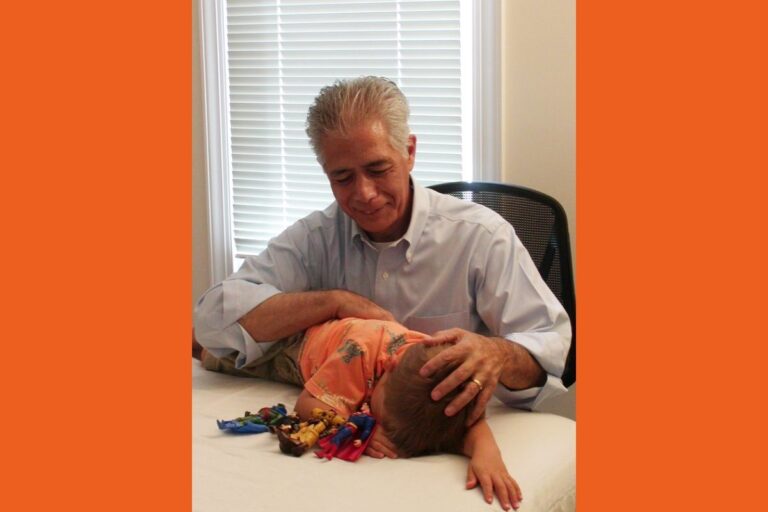
During an early CranioSacral Therapy session, John becomes deeply relaxed. His head repeatedly turns to the right, while his left arm lifts away from his side. The practitioner, trained in SER, begins a process called “dialoguing”. This conversational approach helps John connect with his feelings.
At the same time, the practitioner gently supports John’s involuntary movements and allows them to follow their natural range. Together, these responses may reveal the root cause of John’s physical problems. They also begin to uncover the deeply held memory of his suffering at the hands of his teacher.
The therapist and patient then continue both the dialogue and the physical process. This supports the release of the memory, the affected tissue and the original emotional hurt.
SER follows a patient-centred approach. The process relies on the individual’s own language, beliefs, culture and personal insights.
We stress “simultaneously” because the extraordinary efficiency of the process appears to derive from concurrent psychological/emotional and physical processing.
The Power of Simultaneous Processing
What happens when body and mind release trauma at exactly the same moment?
In our imaginary process with (adult) John, he vividly recalls being mistreated by his teacher. Our primitive brains appear not to have our higher brain’s understanding of time. During his process John feels he is right there again, little Johnny in the presence of his teacher, the colour of the painted schoolroom walls, the distinctive smell of the desks – almost as if he is dreaming. And just as when we dream, our physiology reacts as if that early experience is actually happening now.
With no prompting from his practitioner, during subsequent reflection John begins to understand more clearly the inhibitions, lack of self esteem and irrational fears that have secretly hampered his life’s progress. He realises, for example, how these have made him so susceptible to the tactics of his bullying boss.
John is gradually able to get his career onto a more self-directed and empowered footing. Friends, colleagues and family become vaguely aware that something about him is changing. He is more relaxed, less intimidated, and they feel better in his company. And after a little more therapy, his neck and shoulder troubles clear, and his headaches go away.
How easily does SER occur?
Why some people release easily while others need more time
This can vary enormously.
There are many factors that can increase the likelihood or degree of emotional retention. A key factor seems to be the ability, or otherwise, to accept or integrate a particular experience. In John’s case, not untypical, he is able to quickly get in touch with his problem and, with the right kind of help, resolve it. John had suffered for years in silence. The memory of his teacher was effectively buried: he had little or no idea he even had an emotional problem. He came from a safe and supportive home, and felt quite secure until he attended his first school. The teacher, however, made him feel ashamed and inadequate, unable to seek his parents’ help. Luckily he has good, deep resources to draw on, and as a result he has no real fear about getting in touch with his feelings.
For other individuals, the ease with which they can get in touch with their emotional issues will vary tremendously. The process of SER may be subject to degrees of resistance. But is seems as if some unconscious mechanism allows us to start into our process of SER when we are ready to make a change. CST does seem to be very effective in preparing the ground, gently helping our issues to come nearer the surface, preparing our bodies to play their part in the work.
Where Did SER Come From?
The groundbreaking research that revealed how emotions live in our tissues
During a three-year period between 1977 and 1980, Dr Zvi Karni and Dr John Upledger developed the concept of SomatoEmotional Release® while working together as researchers in the Department of Biomechanics at Michigan State University. Dr Karni was a visiting professor with the department on leave of absence from his post as Chairman of Biological Engineering at the Technion Institute in Haifa, Israel. Dr Karni held doctorates in both Biological Engineering and Biophysics. The research mission was to explore possible areas where the fields of Medicine, Biology, Physics and Engineering might integrate to better serve mankind.
One of Upledger and Karni’s key findings was that on numerous occasions when human tissue goes through a release process, there is a distinctive change in the craniosacral rhythm. It seems that we enter a certain state during such changes, both emotional and mechanical, that can be significant to the patient’s deeper healing. This gives the practitioner an objective physical means of monitoring, and therefore guiding, the process.
The Discovery Through Clinical Practice
How autistic children revealed the universal power of SER
Dr Upledger’s patients revealed the extraordinary usefulness and universality of SER. While working with autistic children, he noticed that a limb would sometimes begin to move automatically. By carefully following these movements, practitioners could support the release of deeply retained trauma.
During one session, a patient began to cry. The therapeutic team continued the process as normal and later noticed the individual appeared more open and communicative. With gentle, non-directive encouragement, further sessions produced similar results. Over time, the approach proved beneficial across many different patient groups and conditions, establishing SER as a truly core therapy.
SER as a Physical Phenomenon: Understanding Energy Cysts
What if emotional trauma leaves a measurable electrical charge in your body?
To help understand we can talk about the concept of the ‘energy cyst’
The final element in understanding why SER can be so effective is the concept of the Energy Cyst. In simple terms, energy cysts are areas of restricted tissue that also appear to carry an electrical charge. They are often associated with trauma sites and practitioners can frequently palpate them with remarkable accuracy.
Energy cysts seem to occur when the tissue receives an energetic input greater than it can discharge or fully recover from. This input may be mechanical, or emotional, or both. What seems clear is that emotional input can be at least as significant in cyst formation as mechanical input. Like a septic cyst, the body appears to wall off the affected tissue to contain its effects. Dr Elmer Green, Director of the Menninger Institute, suggested the term Energy Cyst after Dr Upledger described the phenomenon to him.
An energy cyst will often be the invisible, final missing piece between partial and full recovery of injured tissue. Whatever the cause, the effects of an energy cyst are always physical – in the tissue.
If we find an energy cyst has an emotional component, then typically some degree of emotional release is needed to help it release. Key ingredients for the practitioner in facilitating SER are detecting energy cysts, monitoring the craniosacral rhythm and following the tissue. Experience shows that this hands-on approach, supported as appropriate by dialoguing, guided imagery, creative visualisation and a variety of other neutrally offered tools, is not only empowering for the individual, but can achieve complete resolution of long-standing and deeply held patterns of emotionally-caused dysfunction.
The Importance of the Limbic System
Why speaking the language of dreams unlocks the body’s deepest memories
We understand that when we are truly experiencing emotion, as distinct from merely thinking about it, our awareness is operating through our limbic system or mammalian brain. The limbic system is what we dream with. Unlike our neo-cortex, or higher brain, which is dominant during analytical processes, it is a part of our brain where metaphor, pictures and symbols are the language, rather than the logical use of words.
As already mentioned, it appears not to have the sense of time enjoyed by our “smarter” neo-cortex. But the limbic system connects with our autonomic nervous system and metabolism, which is why our physiology can be affected, sometimes to extremes, during dreams.
In summary…
Careful, guided use of the limbic system provides a direct voice for the body, including the R-complex, enabling us to listen to its messages unimpeded by analysis, diagnosis or conditioning. This is what enables our fictitious hero John to listen to what his shoulder has been trying to tell him most of his life. Recruitment of the limbic system as a channel for communication and change engages the mechanical and the emotional in concert, thereby helping to bring resolution to long-standing and resistant problems more quickly and completely than approaches that focus on the analytical neo-cortex.
I found this article filed away on my computer. It was one that John Page, who ran the Upledger Institute UK before me, wrote for a magazine I believe.
I’ve shared it here because it offers a useful insight into a process that can sometimes be difficult to explain. Thanks, John!
Caroline
P.S. Dr Upledger trademarked SomatoEmotional Release in 1997 because he recognised it as a unique and distinct approach. IAHE (The International Alliance of Healthcare Educators, Inc.) currently holds the trademark and organises courses for a range of approaches, including the Upledger Institute and Barral Institute.
You may also see SomatoEmotional Release written incorrectly as “somatic emotional release”, among other variations. The same happens with CranioSacral Therapy, which people sometimes incorrectly refer to as sacro cranial treatment, cranial sacral work, or craniosacral manipulation or massage. It is not a huge issue, but these variations can confuse search engines.