What it actually looks like, and why so many practitioners say it’s changed their lives
By Caroline Barrow, CST-D MCSS
If you’re at one of those points in life where you’re asking what you actually want to do with your time and energy – really do, not just what pays the bills or fills the days – then the idea of a career in CranioSacral Therapy might be worth exploring. Not because it’s easy, fast or glamorous, but because for the right person, it tends to become something they can’t imagine not doing.
So what does it actually look like?
The Work Itself
CST is gentle, precise and often surprising – for the therapist and the person on the table
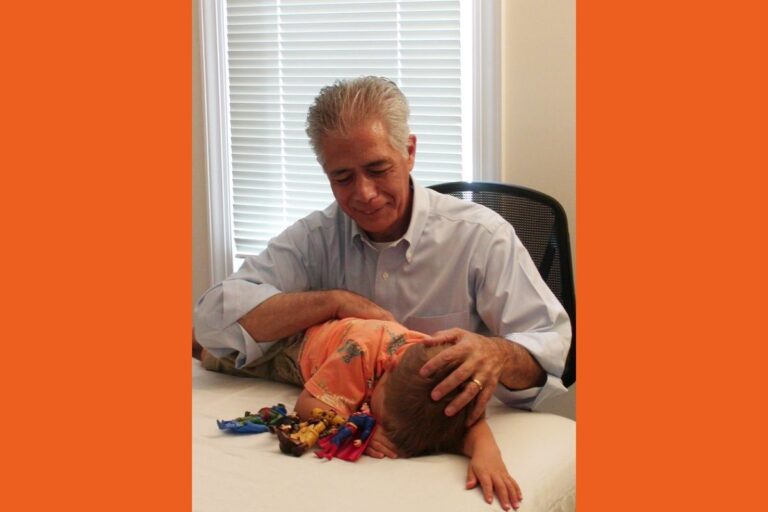
A CranioSacral Therapy practitioner works primarily with the craniosacral system – the bones, membranes and fluid surrounding the brain and spinal cord, and the fascial network connected to it – although we may actually work anywhere on the body. Sessions are usually quiet, focused, and often surprising in their effects. We use a very light touch that supports the body’s own ability to find ease and let go of what it’s ready to let go of.
Clients come with headaches, chronic pain, stress, post-surgical recovery, jaw problems, tinnitus, and a dozen other things that haven’t resolved through other means. What they find from a session, more often than not, is that as their body releases tension, their energy levels change and they feel different after. Sometimes the specific thing they came with goes or changes, sometimes something broader and harder to describe can happen.
As a practitioner, you’re not fixing people. You’re creating the conditions for their own system to do what it’s trying to do. That’s a different kind of clinical relationship from most therapy – less doing, more listening – and for the people who are drawn to it, it tends to be deeply satisfying rather than depleting.
The shape of this as a career
There is no single template, which may be appealing or slightly alarming, depending on who you are!
Most CST practitioners are self-employed, which means the career comes with the freedoms and responsibilities that self-employment brings. You set your own hours, build your own client base, decide whether you work from home, from a therapy centre, alongside other practitioners, or across a combination of all three. Some practitioners build CST into an existing therapy practice; others retrain and it becomes their primary or sole work. There’s no single template, which is either appealing or slightly alarming depending on your personality (!) though the training and community around it means you’re not figuring it out alone.
The training pathway itself runs from an introductory course through CST1 and CST2 (the clinical foundations), into SomatoEmotional Release work, and on through Advanced courses all the way to Diplomate level — the highest Upledger certification. Each stage adds depth rather than simply adding techniques, and most practitioners find that their understanding of what they’re doing keeps developing years after they’ve qualified. It isn’t the kind of career where you do a course, get a certificate, and consider yourself done. Which, if you’re the sort of person who’s genuinely curious about how the body works and what it’s capable of, and knows that we’re always learning, will hopefully be appealing.
How it will affect you
It’s worth knowing before you start that this work affects you personally, as well as your practice!
CST training involves receiving treatment as well as giving it, and your own body-mind-spirit will respond to that. We have to do our own work to be able to support others. Most practitioners find that our training changes them personally as well as professionally; that working at depth with other people requires, and naturally brings about, a greater degree of self-awareness and discovery about themselves. This is why practitioners often describe the training as having changed their lives, not just their work – that bit’s not promised or (necessarily) required, but it’s common enough that it’s worth knowing about before you start!
The community
A strong, caring and deeply committed community has naturally built up over the years
One of the things that distinguishes a career in CST — at least through the Upledger pathway — is that you don’t do it in isolation. Throughout your training and for many years beyond, there are study groups, mentors, ongoing training events, and a network of practitioners who have been supporting each other’s development for, in some cases, over thirty years. We are proud and committed to our community – it’s not incidental to the work, it’s part of what makes it sustainable. Having people around you who understand what you’re doing and why, and who are at various stages of the same journey, makes a significant difference to how the career feels over time.
If any of this resonates — if the idea of working in this way, at this depth, with this kind of ongoing learning and community around it, feels like something you’ve been looking for — then it might be worth finding out a bit more. You could start with an introductory course, which are run by various members of said community, in different parts of the country, or you can jump straight into CST1.
It really is a satisfying, always learning, getting better at it as you get older kind of career.
Written by Caroline Barrow CST-D MCSS
Director of Upledger Institute UK | CranioSacral Therapy Instructor | 30+ Years as a hands-on therapist | Founder of College of Body Science 25+ years developing courses and teaching anatomy, physiology and pathology for complementary practitioners | Passionate about and committed to bringing CST to the world’s awareness and helping people find their own inner wisdom.
Find out more about how to Train from Scratch if you are not already a hands-on therapist, or how to add CST to what you do if you are.
Or just book a CST1 course here.