Since 2015 when Eric Moya developed the mentoring programme and came to the UK to train up a group of our qualified practitioners, we have been able to offer students mentoring as support mechanism in addition to study groups. However, it seems that there is still some confusion as to how they differ. (Especially, perhaps, as most of our mentors are also study group leaders!). Let me try to compare…
Study Groups
Study Groupsare a fantastic way of reviewing course material, working in small groups, usually with a pre-arranged topic. Depending on the size of the group they may, of course, be more or less personal. They enable you to practice on each other, prepare for next level classes, get support from others in the group and help all aspects of the learning process. They deeply support the core curriculum and occasionally other classes.
Mentoring
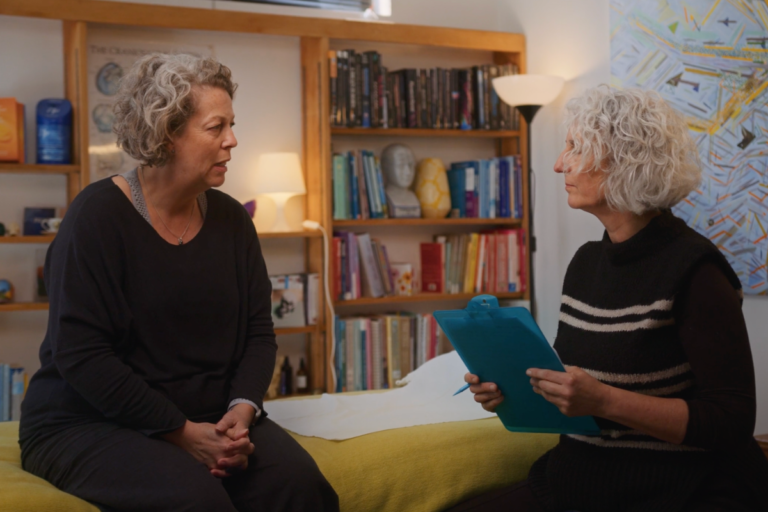
Mentoring is a one-to-one process, in person or on skype, where a student has the opportunity to ask specific questions about their practice, and their development as a practitioner. You might have questions about technique and things that occurred in practice / with clients (which could also be raised in a study group format of course) but the discussion would centre more on personal reflection and consideration at a stage-appropriate level..
So the more you have trained and practiced using the work, the more your questions will move away from basic technique and ideas into more personal queries and observations. EG about how the work may trigger you, what of your patterns and world view are being exposed and brought to the surface or what is coming up for you in relation to your development as a practitioner. A mentor will work within our CST paradigm – with a ‘light touch’, letting the ‘body’ show us what is needed. It can be a useful way to focus on the self-reflective part of your practice with
one-to-one support and attention.
–> Personal Treatments
Of course, there can be a degree of overlap between study groups and a mentoring session; in essence, it offers a more personal dive into where you are now and what your next steps are as a developing practitioner. This holds true for all of us at all stages – as mentors we also mentor each other so we have the experience from both sides – and some life-changing stuff has come out if it! Different aspects of our journey can emerge and evolve – not necessarily better, just other, pieces.
Then, with what may come up in a mentoring session, (or in a study group) you may feel the need to dive deeper into your personal work by exploring the issue on the table, with an experienced practitioner skilled in the SER work. Another way to overlap which is different again … !
You can come along to a study group after doing an introductory course (with one of our Introductory course leaders) or any other courses. Find out when and where they are running on the Study Groups page.
To find a mentor, go to the mentoring page and you will see how to contact our different mentors.